Author: Thandwefika Tshabalala

  • Who Loves the Smell of AI in the Morning?

    Who Loves the Smell of AI in the Morning?

    #MyAIApprentice

    Who Loves the Smell of AI in the Morning?

    TL;DR – The short version:
    AI-generated writing has a smell, and it survives the tricks people use to hide it. You can delete the em dashes and retire the clever “it’s not X, it’s Y” and it still reeks, because AI writing tells are structural: the point stated twice, a post that interviews itself with “Why? Because…”, every sentence marching on its own line, lists that are suspiciously even, and above all writing that is advice-shaped but experience-free. The deepest tell is that the writer has never actually done the thing they are describing. The fix is one move: put a true, specific, slightly embarrassing detail back in. Swap one “I would” for one “I did”.

    There is a moment in my morning routine when I catch up on the news, the thought pieces, the innovations in my industry. It used to be a time for reflection. A time to hold my own work up against what everyone else is doing and see where I stand. Now it is being stunk up by the smell of AI’s morning breath.

    You know the stink I am talking about.

    You are scrolling. A post slides up the feed. That one-line hook. Then a line break. A single dramatic sentence, alone, for effect.
    The grammar is spotless. The em dashes have been carefully removed, because someone whispered that em dashes were a tell. The clever “it’s not a job, it’s a calling” has been retired too.

    And yet. Something is off. It still smells like AI.

    A short theory of smell

    Your nose is faster than your brain. You walk into a room and you know, before you can say why, that the “fresh linen” you are smelling has never been near actual linen.
    It is a chemical committee’s best guess at linen, sprayed evenly across every surface until the whole room is uniformly, plastically pleasant, and very slightly nauseating.

    That is AI writing. It is the air freshener of language; Perfectly even, faintly sweet, and scented with “insight”. And once your nose is trained, you cannot un-smell it.

    The top notes: AI writing tells that survive the perfume swap

    People think the smell lives in the punctuation. Remove the em dash, they say, and you are safe. You are not.

    The fragrance goes deeper than the bottle it came in. Here are the surface notes, the ones some people have already learned to spray over:

    • The rule of three, always three. Never two, never four. And its evil twin, the negative triad: “not this, not that, not the other thing.” Three tidy clauses, marching in step. Humans are messier than that.
    • The hedging adjective that does no work. “A quiet confidence.” “A simple truth.” “A humble reminder.” Delete the adjective and the sentence loses nothing, which is how you know it was scent, not substance.
    • One word, rubbed threadbare. The writer finds a metaphor they like and wears it to a shine. Everything becomes a journey, a landscape, a game, a bet. 
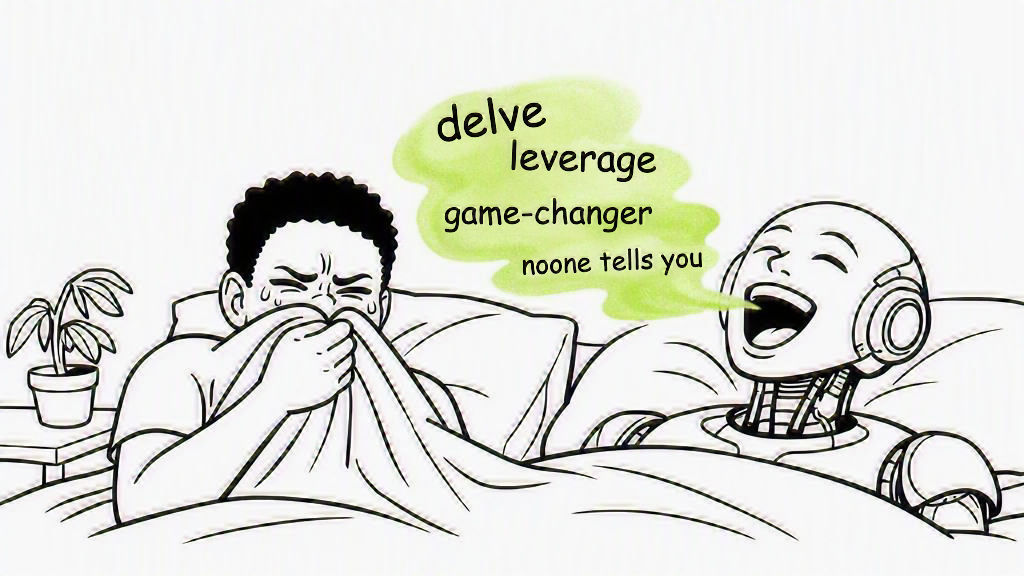
    • The vocabulary. You know the words that make your top lip close your nostrils: game-changer, delve, unlock, leverage, elevate, empower, harness, foster, robust, seamless, streamline, navigate, landscape, realm, tapestry, testament, underscore, pivotal, spearhead, cutting-edge, transformative, resonate, unpack, “dive in”, “in today’s fast-paced world”, “at the end of the day”, “moving the needle”, “let that sink in”, and the one that makes you gag at the stench, “In conclusion.”

    The base notes: where the real AI smell lives

    Spray over all of that and the post still turns your stomach a little. The base notes go deeper than any word list:

    • It states its own point twice. “If I had two weeks, here is exactly what I would do.” Then, eight lines later: “Now, if I had two weeks, this is exactly what I would do.” A human says the setup once and moves on. AI re-announces the thesis because it is stitching sections together, and it reaches for the word “exactly” to sound precise while promising nothing.
    • It interviews itself. The one-word “Why?” on its own line, answered by “Because…”. Real people do not stop mid-thought to ask themselves a question and then answer it for you. That little call-and-response is a machine clearing its throat.
    • Every sentence gets its own line. Not for meaning. For drama. The whole thing marches, one lonely sentence at a time, because that is the cadence the model was trained to imitate. Real writing bunches up and then sprawls. It breathes unevenly.
    • The lists are too tidy. Five clauses, all the same shape and length. Four “Maybe it’s…” in a row. Real observation is lopsided. One item is always longer, or stranger, or slightly out of pattern. When every item matches, it was generated as a set.
    • The decorative bluntness. “Nobody cares about that.” “They are literally paying for attention.” This is AI doing an impression of a plain-talking human. The bluntness is a costume.
    • And the one underneath all the others: it has never done the thing. Read closely and there is not a single real detail. No business it actually found. No audit it actually sent. No reply, good or bad. No name, no number, no scar. It is all conditional. “If I had.” “I would.” “Maybe it’s.” AI writes in the hypothetical because it has no memory of Tuesday. That is the deepest note in the whole bottle, and once you smell it you cannot stop.

    Smell test: Let me show you an example

    Here is a post I see some version of every week. The niche changes. The smell does not.

    The fastest way to land your first AI automation client in 2026 is probably not what you think.

    If I had two weeks to get my first client, here is exactly what I would do.

    Your first job is not to sell AI.
    Your first job is to find businesses already losing money.
    I would open the Facebook Ads Library.

    Why?

    Because businesses running ads are already spending money.
    They have a budget.
    They have a problem.

    Then I would look for the gaps. They are getting leads but no follow-up.
    They have no chatbot.
    Their booking is manual.
    Their sales team is wasting hours.
    Their website visitors have nobody to talk to.

    These businesses are literally paying for attention. Nobody cares about the tech.

    So I would record a personalized audit. I would show them the money. Do this every day. Find 20 businesses. Send 20 audits. Build proof.

    The goal is not to sell AI. The goal is to show them the money walking out the door.

    That’s how I would get my first AI automation client in 2026.

    I love the advice given in the post. Clean grammar. No em dashes. But it reeks: Restated premise, the “Why? Because” self-interview, three “not this, it’s that” flips, a suspiciously even list of five, a “literally”, a “Nobody cares”, and under all of it, a person who has plainly never once opened the Facebook Ads Library and sent a real audit to a real business.

    Now watch what one human hour does to it, I rewrote the above for this poster into the following.

    Getting your first client as an AI automation specialist is less about pitching and more about proof. Here is the approach I would use if I were starting over.

    First, be honest about whether you are ready. If you have not built a single working automation, chatbot or agent that does something real, spend the next fortnight building rather than hunting. Clients can smell someone who has read about the work but never done it.

    Once you can actually solve a problem, the finding is easy. Open the Facebook Ads Library and look at businesses already paying to get customers. A company running ads has told you two useful things: it has a budget, and it has a problem worth money.

    Then look for the gap between the ad and what happens after someone clicks. It is usually obvious once you follow the path yourself. The ad promises a fast response and the enquiry sits until the next morning. This happened to me when i was looking for pest control services. By the time some vendors answer a different one had delivered. You are looking for money leaking out of a machine that is already paying to fill the top of it.

    If you really want to stand out: Skip the “Hi, I am an AI automation expert, do you need my services” message. Do the work first, before anyone has agreed to anything. Record a two-minute walkthrough of their customer journey and point at the leak: “I followed the path a customer takes on your site, and here are two places you are probably losing them, and roughly what that is worth every month.”

    Then show the smallest fix that closes the biggest leak. Sometimes it is a chatbot. Sometimes it is automatic follow-up in the first five minutes after a lead comes in. Sometimes it is a booking link that kills six back-and-forth emails. Keep it to one thing they can say yes to.

    Do that for twenty businesses in a fortnight. Most will ignore you. A handful will reply. One or two will book a call, because you did the thinking before you asked for anything, and that is rare.

    Same advice. Same length, near enough. The difference is that a person is now standing behind it. The sentences vary. The list is uneven. Nobody interviews themselves. And there is a hole shaped exactly like a true story, waiting for the one thing a machine could never supply: a Tuesday I actually lived.

    The point

    None of this is a crime. AI is a wonderful tool. I use it every single day. I used it to write this post, and I used it to help me notice half of the AI writing tells I have mentioned, which is either deeply ironic or exactly the point.

    If you are going to write with AI, learn to deodorise properly. The fix is smaller than you think, and it is always the same move: put one true thing back in. A real story. A real number. A real place. An opinion your compliance officer would ask you to soften. Swap one “I would” for one “I did”, and name the slightly embarrassing specific: the client who ghosted you, the awkward Loom, the four thousand rand you charged for your first job and undercharged badly. One lived detail breaks the spell instantly, because it is the one thing a machine cannot fake.

    Right now, too few people are doing the work, and most of my feed smells like a strawberry scented toilet spray called “Thought Leadership”, and it’s giving me a headache.

    I give AI-generated LinkedIn wisdom a nauseatingly synthetic 2 stars. It would be one, but it did save me some typing.

    Frequently asked questions

    Why does my writing still sound like AI even after I remove the em dashes?

    Because the strongest tells are structural, not punctuation. Removing em dashes and the “it’s not X, it’s Y” flip only clears the surface. What remains is the deeper pattern: restating your point twice, asking and answering your own questions (“Why? Because…”), putting every sentence on its own line, writing suspiciously even lists, and, most of all, writing advice you have never actually carried out. Those survive any find-and-replace.

    What are the biggest tells that content was written by AI?

    The rule of three used relentlessly, hedging adjectives that add nothing (“a quiet confidence”), one metaphor worn threadbare, a starter pack of buzzwords (delve, leverage, unlock, robust, seamless, “In conclusion”), a post that interviews itself, uniform one-sentence-per-line rhythm, and lists where every item is the same length and shape. The deepest AI writing tell is content that is entirely hypothetical, with no real names, numbers, dates or lived detail.

    How do I make AI-written content sound human?

    Add one true, specific, slightly embarrassing detail that only you could know: a real client, a real number, a real place, a real mistake. Swap one “I would” for one “I did”. Then break the rhythm so your paragraphs vary in length, make at least one list item uneven, and cut any sentence that asks itself a question. A single lived detail does more than a hundred edits, because it is the one thing a model cannot invent.

    What words give away AI writing?

    Common ones include delve, unlock, leverage, elevate, empower, harness, foster, robust, seamless, streamline, navigate, landscape, realm, tapestry, testament, underscore, pivotal, spearhead, game-changer, cutting-edge, transformative, resonate and unpack, plus phrases like “dive in”, “in today’s fast-paced world”, “moving the needle” and “In conclusion”. None are banned on their own. The AI writing tell is the density: several of them, evenly spread, with no real detail between them.

    Is it wrong to use AI to write?

    No. AI is a useful writing tool and most good writers now use it. The problem is publishing the machine’s default output, which is smooth, even and empty. Use it to draft, argue with, and edit faster, then put yourself back in: your real stories, your real opinions, the specifics only you have lived. The goal is not to hide that you used AI. It is to make sure a human is still the one doing the thinking.

    About the author

    Thandwefika Tshabalala is a storyteller, PMO practitioner and AI coach based in Johannesburg. He is the founder of DBiLL, trains teams to work with AI, and is the 2019 Southern Africa Champion of Public Speaking. He writes about the things that catch his curiosity at thandwefika.africa.


    This is part of the series My AI Apprentice, documenting the rebuild of my firm, AI-first, in public. Read the whole series · Start at part one.
  • THE RED ON THE RAINBOW

    THE RED ON THE RAINBOW

    Play.
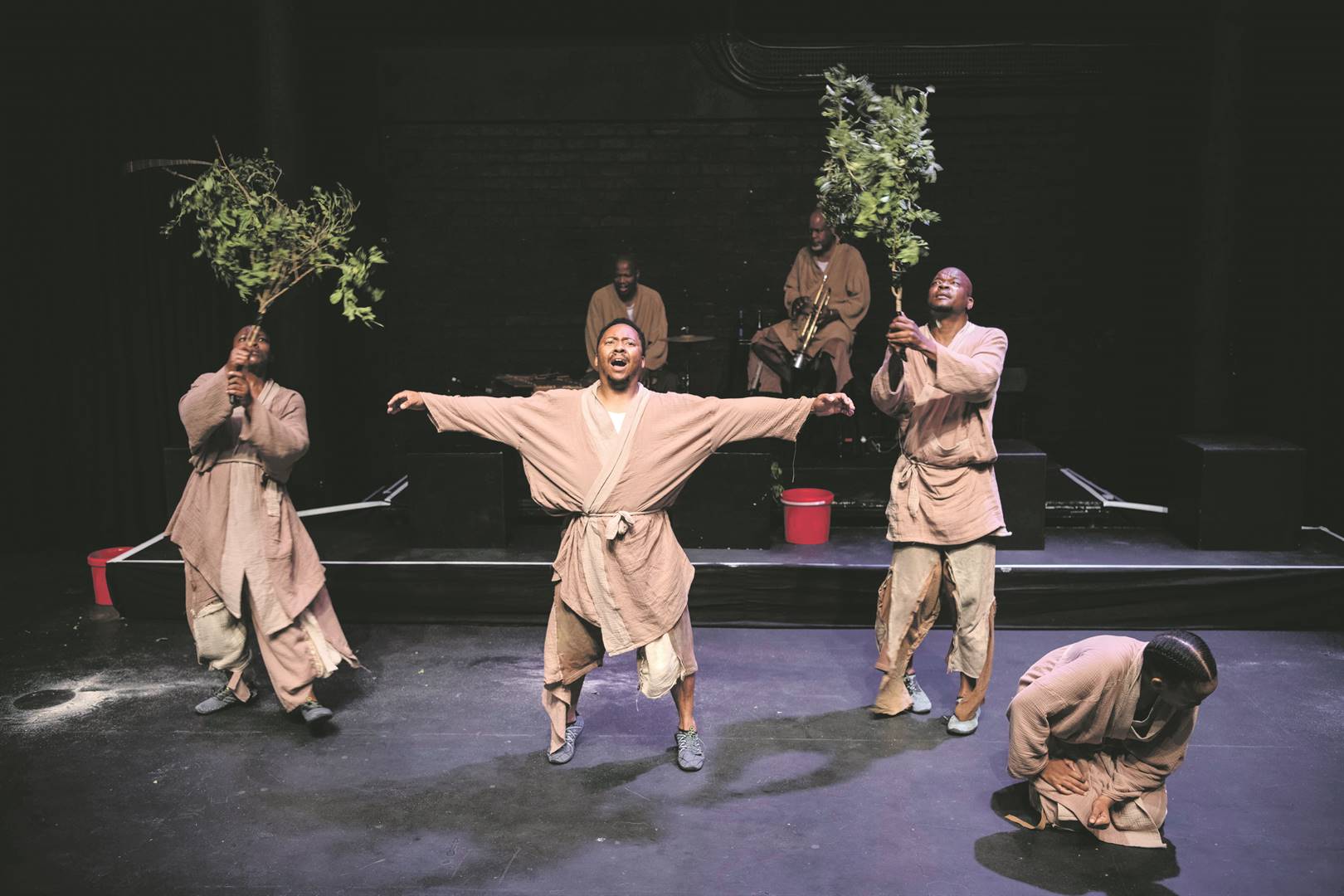
    An old woman hobbles across the stage. Her back hunched, her neck extended, and face crumpled. In a raspy voice filled with a lifetime of pain and anger and a cold determination, she delivers her line; demanding to see the man who killed her son.
    Pause.

    I am in awe. I am in awe because this is not an old lady I am watching. It is a young actress, and I
    forget this as she deforms and contorts her posture, her face and her voice until all I can see is an old
    woman grieving for a slain son. She has truly and thoroughly embodied the character she is playing.

    Play.
    Beyond the gate stands an equally angry Afrikaans farmer refusing to give up his son. In a
    commanding tone, he urges the police commissioner to dispatch the swelling angry mob at the edge
    of his gate. He threatens angrily before raising the gun in his hand.
    Pause.

    I teeter at the edge of my seat. Heart racing, tension thick in the air, as I silently urge for restraint. I no
    longer see the actress playing the farmer. I only see a father desperately trying to protect his son
    from an agitated mob.

    Play.
    The mob gets angrier and angrier pushing against the thin fence. The farmer gets desperate. And
    then. Bang! The farmer shoots.

    The scene pauses. Silence veils the stage. The old woman glares defiantly at the farmer. The farmer’s
    angry face glowers back at the old woman and the mob at her back with only the fence between
    them.

    I draw my breath, waiting. Waiting for the scene to continue, waiting to know who was shot. waiting
    to see how this terrifying story ends.

    In that pause, I look across the stage marvelling at what has been created here. There is no gun on
    that stage, no fence, no swelling mob. Just 5 talented actors using their bodies to tell a rich and vivid
    story that asks one important question; is this the rainbow that the rainbow nation was promised.

    The Red on the rainbow is a masterfully written and superbly acted play of something that took place
    on a farm in the town of Coligny. The red on the rainbow is the very definition of theatre. You should
    go watch it now to find out what happens to the old woman. You should go watch it now here in
    South Africa before it is recognised by the rest of the world and you must take connecting flights to
    see it in Broadway, New York.

    I give “The red of the rainbow” a masterfully crafted 5 stars

  • When anxiety and insomnia leave you sleepless

    When anxiety and insomnia leave you sleepless

    What do they call it when you wake up at 3 am? Tied down and covered by something heavy;
    a thick wet blanket, woven of every bad decision you’ve ever made.

    What do they call it when regrets pours on? Leaving you gasping and choking,
    unable to breathe or to move or to wriggle free, trying to catch your breath in the dark.

    What do they call it when Panic sets in as it does when one drowns?
    As you lie there sobbing; trying to process an emotion you have only ever heard people describe but never felt until now.

    What do they call it when all you can do is gasp and choke, waiting for a dawn that may never come?

    Thandwefika Tshabalala 19.05.2020

    I wrote this passage one morning a couple of years ago after waking up in a state of panic and anxiety that I could not yet describe because I had never experienced anything close to this.

    The closest words I had for this was “Waterboarding“; a form of torture in which water is poured over a cloth covering the face and breathing passages of an immobilized captive, causing the person to experience the sensation of drowning. That night felt like I was being waterboarded by my own brain.

    At first, I put it down to the stress and uncertainty of a COVID world. Maybe my brain was warning me of some deep-seated fears I harboured while trying to steward my family through this period. So I stayed up and made plans, I built contingencies to ensure that we survive the uncertainty. Yet occasionally my brain still waterboards me.

    I read numerous research-based articles and made several changes to my habits and patterns. The night terrors do not bother me as often anymore, but I still struggle to fall asleep. Thankfully, the waterboarding has now been downgraded to insomnia.

    I remember the 19th of May 2020 as clearly as a mother remembers the day their baby was born because for me that is the day my insomnia started.

    For that reason, I rate this particular night a lousy 1 star, and insomnia can eat shit.

  • What my father and Phillips taught me about standards

    What my father and Phillips taught me about standards

    One of my favourite hobbies when I was young, was to go to work with my father; as his tools boy. I remember how he would lavish praise on me when I brought him the correct tool on command.

    “Daddy, Who is Phillips,” I asked him one day when he sent me for his 7.5mm Phillip’s screwdriver.

    My semi-educated (though well-read) father did not know.

    So I do a little research

    Decades later I learned that there was a time when the world did not have standards. Not even for simple things like which direction a screw had to turn in order to fasten. Each manufacturer would machine screws and tools in whichever way they saw fit. For them, it was a thing of pride to create each part differently as a way to differentiate their product in the booming age of the industrial revolution.

    The challenge though is that nobody could take advantage of economies of scale when each part was machined in small quantities specifically for each client.

    William Sellers takes on the challenge

    That is why In 1864, a businessman and machinist named William Sellers set out to form the first set of standards for the world. Starting with the humble screw.

    He didn’t care much which standard was eventually adopted, only that “a” standard was adopted.

    Can you imagine the vociferous arguments between engineers and business owners as they debated whether tightening should be clockwise or anti-clockwise? Half of them would have to go back to their machine shops and change their design depending on the outcome. No one wants to be the one that changes.

    William Sellers navigated these discussions and led the various consortiums to the first set of standardisation. Today there are almost a million registered global standards that govern everything from making sure your email opens in any device to the direction a tap opens. This standardisation ushered in an era of mass production that still benefits the world today.

    Standards are important to our lives

    I am reminded of this every time I step into a Spur; irrespective of whether it is in Capetown, Kathu or Musina. I have come to expect consistency and familiarity that immediately makes you feel like you are visiting a favoured aunt who you have visited a thousand times before. That is the value of a consistent standard, and few South African franchises come close to Spur in this area.

    I eventually found out who Phillips was, but that no longer mattered to me. To me Phillip is a standard, something to strive for in all my work… and more importantly, it is a memory that I shared with my father, as a young boy handing him his 7.5mm Phillip’s screwdriver.

    I give Phillip’s screwdrivers a memorable 5 stars.

  • It’s a Tinder date

    It’s a Tinder date

    It is sunset, and I am sitting at the terrace next to the bar, curiously observing the olden architecture of the farmhouse that has now been converted into this famous restaurant. From where I sit I can see the bar, I can see the outdoor sitting area, and more importantly, I can see the car park and entrance.

    This is important because I am passing time while nervously peering into every car that enters the gate… I am waiting for my tinder date.

    A woman walks in and is happily welcomed by her friend. A group reshuffles to make space for another member of their large family. A lone figure sits smoking his cigar in silence while people-watching. And I am passing time.

    I am ready to impress. The food is good, the music accommodates conversation, the atmosphere is relaxed, the staff feels like old friends and I am waiting, passing time.

    I look to the parking at the jeep that just parked and then finally, I see her; tall, lanky and a smile that made me super like. No more waiting, it is time.

    Mike’s kitchen is everything for everyone. And I give it 5 stars for being the perfect spot for first dates with Tinder dates.

  • #STOPTHESPREAD CAMPAIGN

    #STOPTHESPREAD CAMPAIGN

    The Midnight Train is a citizen-led Action group where ordinary citizens can initiate, champion, or support campaigns in response to disasters and global emergencies.

    The #STOPTHESPREAD campaign is dedicated to creating nation-wide projects that help the government stop and respond to COVID-19

    Together with my cofounder Lazola Belle, we work with the most committed Midnighter to analyse pressures on our communities and structure appropriate campaigns before calling ordinary citizens into action.

    Through their participation Midnighters are reminded that they matter as citizens and that ordinary citizens can make a difference in any humanitarian crisis. This transforms ordinary citizens by day into heroes by night.

  • Modernly authentic

    Modernly authentic

    #ConventionalReview Kota Paleis Braamfontein

    I have often pondered what makes something authentic.

    Is it time? Must something be passed through generations and accepted by all in order to gain the status of authentic?

    What about immutability? Must it remain static, unchanged, fixed in its form for all eternity; at the threat of losing authenticity with the slightest modernization?

    Must it be unique? Can there only be one authentic thing of it’s kind? So much so that it can no longer be adopted nor adapted?

    I ask because there is nothing special about this place. It’s kotas are stripped of pretense, there is not much quality in its ingredients, the facilities consist entirely of 5 small tables and 15 chairs scattered scarcely across the eating area.


    Yet I found it authentic.

    I found it authentic because Kota Paleis is exactly what it appears to be. A low cost, no-frills, clean budget food for students with no budget.

    I found it authentic because in 20 years a group of friends will meet for a drink in an upmarket bar and trade stories of days gone by when they were students, and all they could afford was a kota at what to them would have become the legendary Kota Paleis.

    That for me is authenticity.

    I give the Kota Paleis a modernly authentic 3 stars.

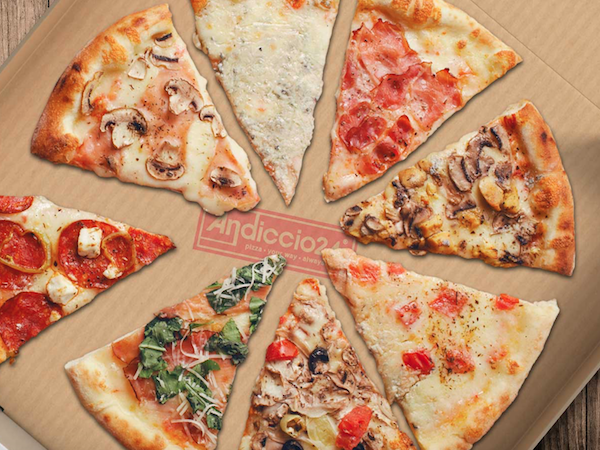
  • 3 am food run to Andiccios

    3 am food run to Andiccios

    It’s 3 am and an uber slows then stops outside the corner restaurant. 4 party goers spill out still singing the summer anthem from the club they had just left at closing time.

    Hungrily they stumble to the counter and design the craziest pizzas I have ever seen in a bid to stave off the post-party starvation that sets in between club and bed.

    I watch in silence as the party of four devours the crazy pizza while retelling their adventures and antics of the party that was.

    I have never seen a full Andiccios and often wonder how they stay in business with their premium prices for non-premium food.
    Finally today, at 3 am on a Saturday morning I finally understand.
    This immaculate 24-hour diner has become a rite of passage for drunken and giddily happy yuppies and hipsters. A place to consolidate the memories of a great night out before committing them to the permanent memories of a youth well lived.

    I pick up my pizza, stumble to my car, and drive home to commit my own antics of the night that was into permanent memories.

    I give 3 am food runs to Andiccios 4 stars.

  • Chasing Sunrises

    Chasing Sunrises

    It is a few minutes before midnight on a Thursday evening. Njabulo and I are hurtling down the N1 from Johannesburg to Durban. Our mission only allows us 5 hours to reach our destination or everything, this whole trip, would have been for nothing.

    It started when I mentioned to Njabulo that I have always loved sunrises, much more than sunsets. Even though we all experience a new day every day; very few of us take the time to experience a sunrise. I am not talking about going to work in the morning while the sun is rising, I mean really experiencing a sunrise.

    That’s what makes them so rare when compared to sunsets. You can experience a sunset simply by stopping what you are doing and looking out the window at the right time. You can add a little effort and find a good vantage point on your way home. But sunrises are different, they require some discipline and a little sacrifice.

    That is what lead us to take an unscheduled trip from Johannesburg to Durban on a Thursday evening, so we can be at the beach to watch a sunrise by dawn. We drove through the night, swapping drivers frequently and carefully watching our time because nature cannot be postponed. We would miss that sunrise even if we were only 15 minutes late.

    We finally reached the beach with 5 minutes to spare. We parked on the easternmost edge of the Marine Parade, stepped out into the cold crisp morning air, and let the world fade away for a moment.

    Oh, what a sunrise it was.

    The sun crowned as it put on it’s perfectly coloured performance of warm hues. With it came the promise of a new day punctuated only by; the rhythmic strides of early morning runners, the sounds of waves greeting the beach, and the sporadic distant honking of taxis ferrying workers to work.

    We stood there for a moment, the world still faded, admiring the sheer beauty of it all, the sheer stupidity and irresponsibility of our drive, and the closeness of our friendship that let us convince ourselves to do this in the first place.

    “The shops are opening soon,” I say eventually, breaking the spell that had befallen us. “Let’s go buy some breakfast and toothbrushes” I added, as we turned to leave.

    The rest of the weekend was epic and the city of eThekwini is a great host. And I still chase sunrises from time to time when I need the world to fade away for a moment.

    I give the act of chasing sunrises 5 stars.

  • Southern Africa Champion of Public Speaking 2019/2020

    Southern Africa Champion of Public Speaking 2019/2020

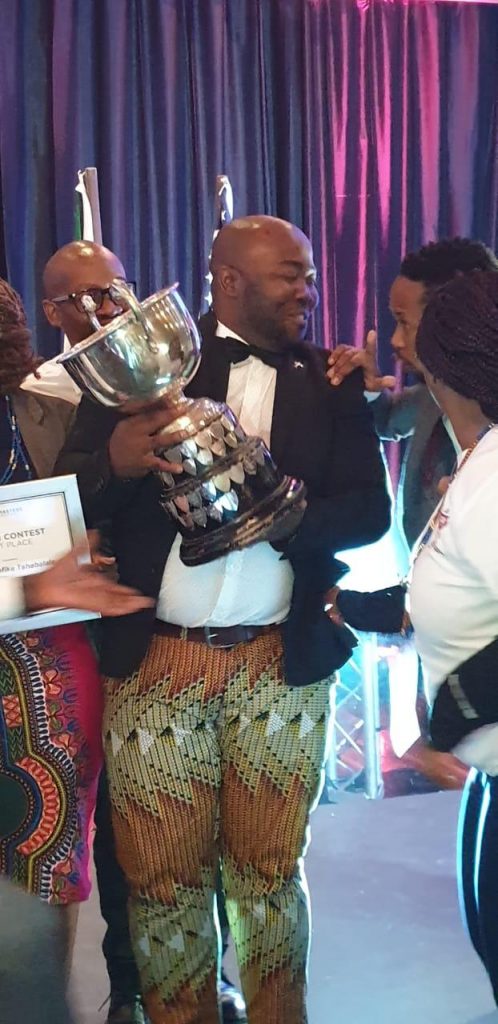
    On the 18 May 2019, Thandwefika Tshabalala became the Southern Africa Champion of Public speaking in a contest with over 800 entrants from 9 Southern Africa countries.

    Every year, the Toastmasters International Convention culminates in the International Speech Contest, where the World Champion of Public Speaking ® is chosen. In this exciting event, 10 contestants chosen from 142 countries and 33 000 entrants deliver 5- to 7-minute speeches that are evaluated by a panel of experienced Toastmasters.

    The Southern Africa finals held in Thaba Eco Lodge South Africa is the climax of a year of competing in club, area, and district competitions. Thandwefika is currently preparing for the final stage of the contest where one of the contestants will win the prestigious accolade of World Championship of public Speaking

  • Becoming a Property Mogul without Traditional Capital

    Becoming a Property Mogul without Traditional Capital

    Conventional wisdom says: to be a property mogul you need an idea, a team and plenty of capital.

    Elsie and her SACCO (Savings and Credit Cooperative, or Credit Union) made up of 150 single mothers bound by the spirit of Harambe disagree.

    Meet Elsie, a dynamic single mother of the cutest twin daughters. They have found a unique way of participating in Kenya’s rocketing economy.

    When a new development started in Athi river; 30 kilometers south of the bustling capital Nairobi, Kenya. Elsie used the spirit of Harambe (the pulling together of a community to help each other) to secure R13 000 capital from each of the single mothers and buy four units off plan.

    She admits that in the beginning, it was challenging. Trust is not easy when dealing with money, and they lost some members along the way.

    But the spirit of Harambe is strong here in Kenya, it the official motto of the country and it stands proudly on the coat of arms. Using this spirit and a Savings and Credit Cooperative (SACCO) the ladies smiled as their capital double when the housing complex was completed.

    Elsie and the SACCO now lease out their units through AirBnB for R500 per night and they are fully booked until April 2019. The R600 000 generated through the units allows the ladies to buy 2-3 additional units per year. At this rate, Elsie is well on the way to being a property mogul.

    Conventional wisdom says you need plenty of capital to be a property mogul. To hell with conventional wisdom, This is Africa. Here we have Harambe.

  • Social Investment and Trade

    Social Investment and Trade

    Executive member of the SIT Foundation Board, Head of SIT Academy

    Social Investment and Trade Foundation is a Non-Profit Organisation focused on the financial literacy and generational wealth creation of ordinary South Africans. The SIT Foundation has established the SIT Academy to educate its members and has also established the SIT invest group and the Banking Service group to put our members increasing financial literacy into practice.

    My mission as the Head of SIT Academy is to provide every member with an opportunity to improve their financial literacy in the pursuit of their goals of economic freedom. My team and I aim to do this by establishing an academy with member education programs that can scale to effectively provide financial education to the more than 200 members of the SPN (SIT Professional Network)

    The educational program will be designed to have the follow characteristics

    Holistic educational experience: The education programs should provide a holistic member experiences that begin with an orientation into the SPN.
    Accessible Programs: Education programs should be accessible to all members irrespective of geographical location, level of financial education and access to resources.
    Hands-on education: Education programs should be practical and encourage members to take on leadership roles within the many committees and subcommittees that exist in the SIT Professional Network.
    Do not reinvent the wheel: There is a wealth of financial information and education the market. The SIT Academy will use existing platforms to create a structured path of education for members to follow.

    Social Invest and Trade in the Media
    Podcast – The Money Fam
    Podcast – Hustle and Flow

  • Toastmasters International

    Toastmasters International

    Past Area and Division Director. Division L, District 74 Southern Africa

    With a 514 000 strong membership, Toastmasters International is a world leader in communication and leadership development. Members improve their speaking and leadership skills by attending one of the 14,650 clubs in 126 countries that make up the global network of meeting locations.

    I am a member and Past President of Rosebank Toastmasters, “The coolest club in Africa”. As President of the club, we achieve the status of President Distinguished for the first time in 5 years. We worked on establishing a financial system and improving the clubs marketing process. The club has since grown from 8 members to a healthy 50+ membership.

    The following year I became a charter member and first VP of Education for The Social Network Toastmasters, affectionately know as “The Productive Turnup”. We designed TSN Toastmasters to provide a Friday evening alternative to clubbing and partying. That is why TSN Toastmasters is one of only two clubs globally that meets on Friday evenings, leading to 150 attendee events that are unheard of in Toastmasters. During my term, the club reached President distinguished status in its first year.

    The next few years I served as a District leader. First as an Area director responsible for 5 clubs and achieving a President Distinguished Area. Then as a Division Director of Division L that consists of 29 clubs across two countries South Africa and Botswana. As a Division, we achieved the Select Distinguished status.

    As a member, I have attained the Advance communicator Silver award and the Advance leadership bronze awards. I am currently pursuing The status of Southern African Champion of Public Speaking, and am in the running as The Social Network Toastmasters Club Champion.

  • Stories to live by

    Stories to live by

    Producer, Podcast Host Stories to Live By

    It can be difficult to keep a positive attitude when life is throwing challenges at you.

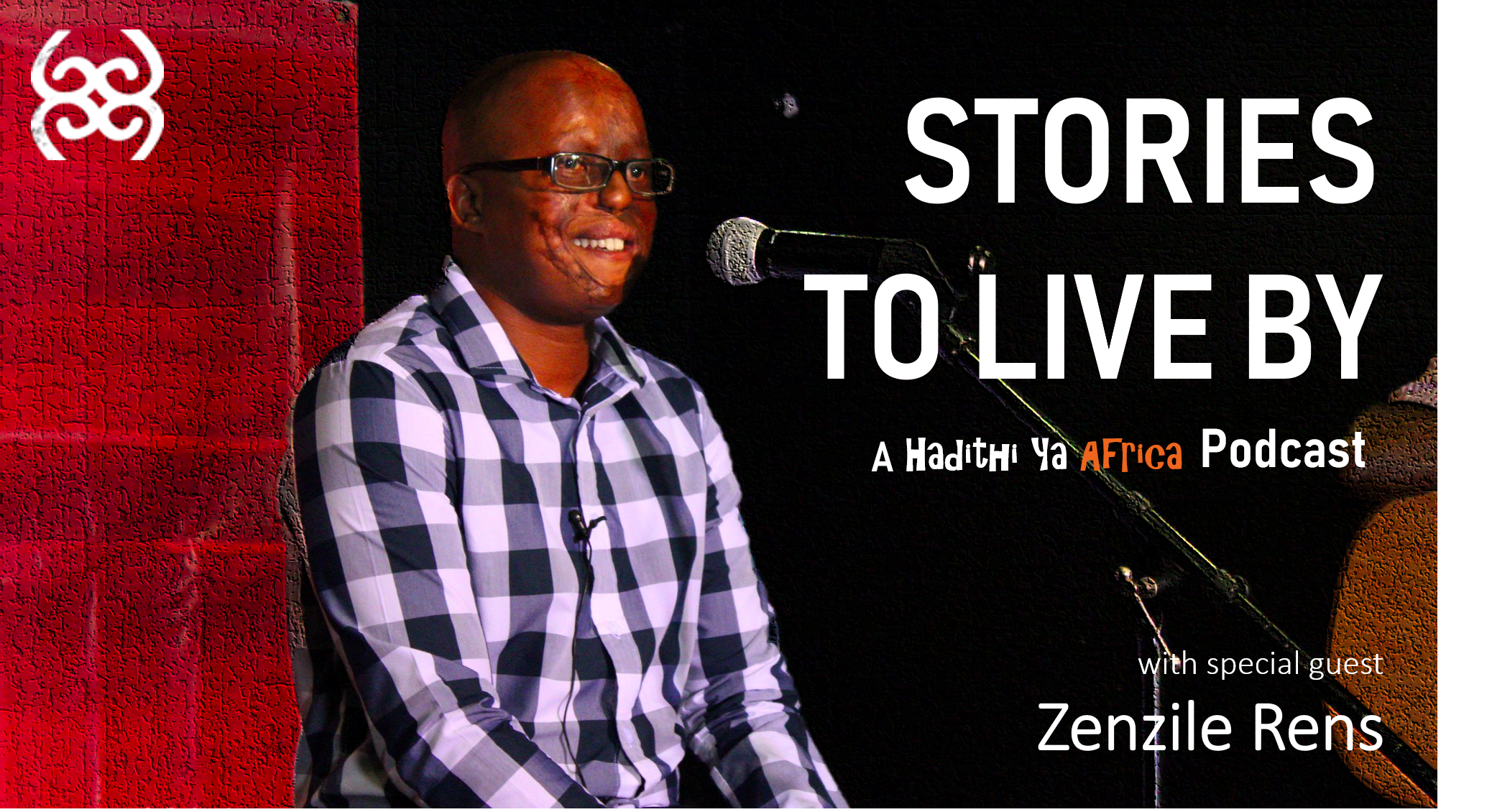
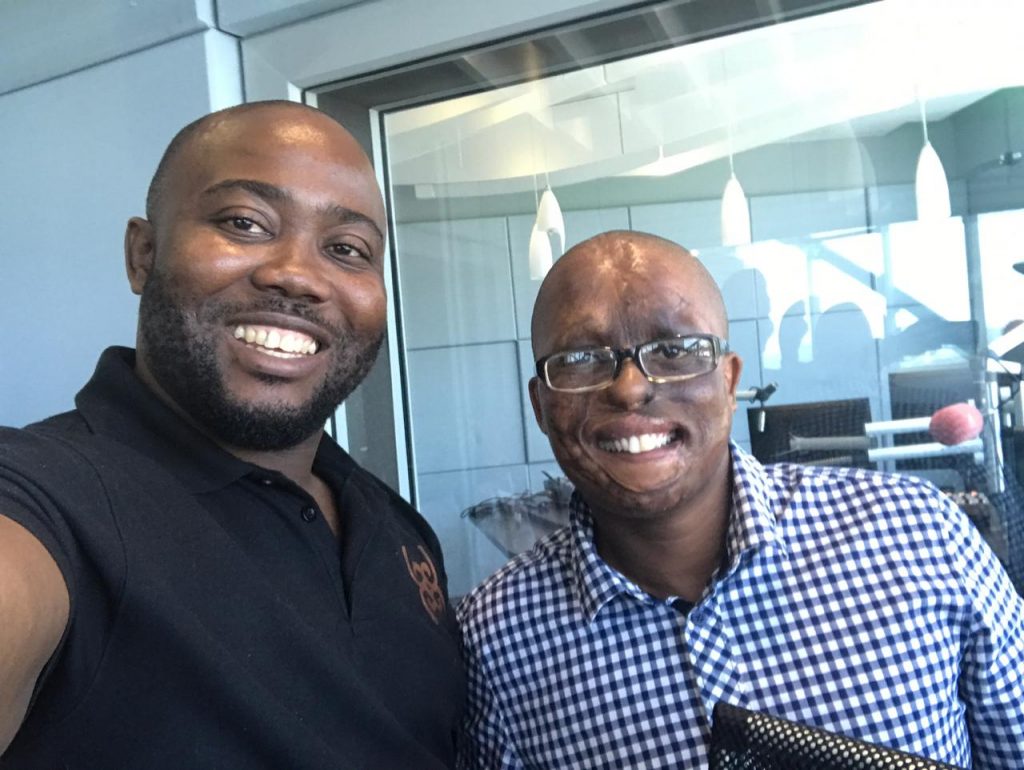
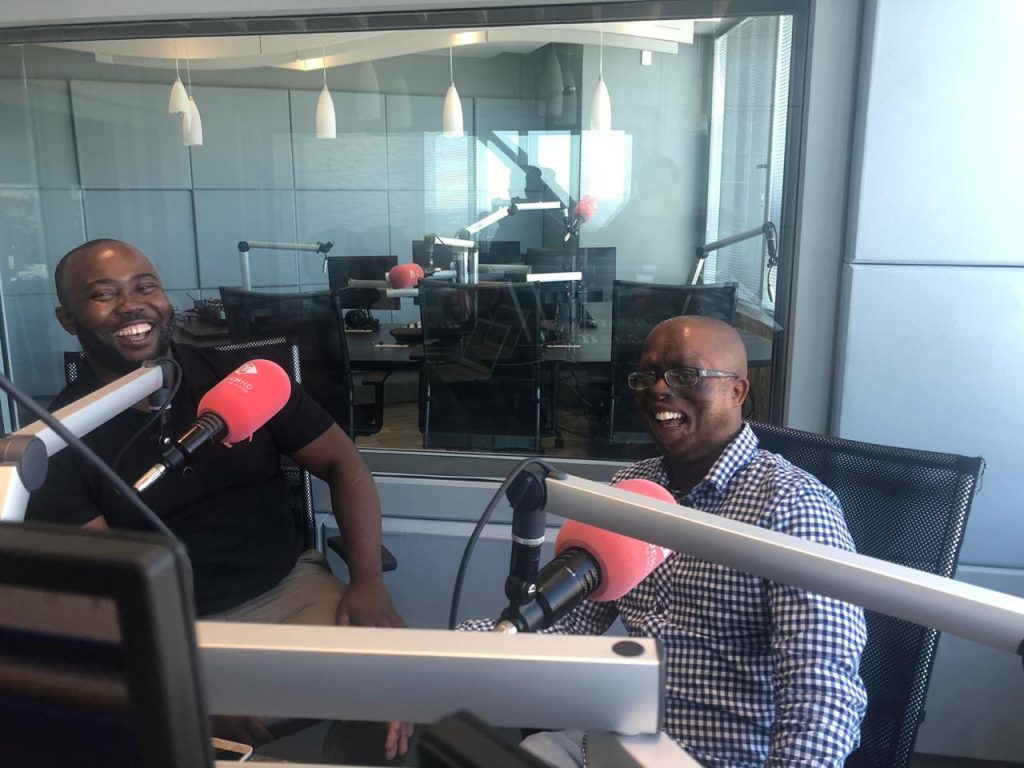
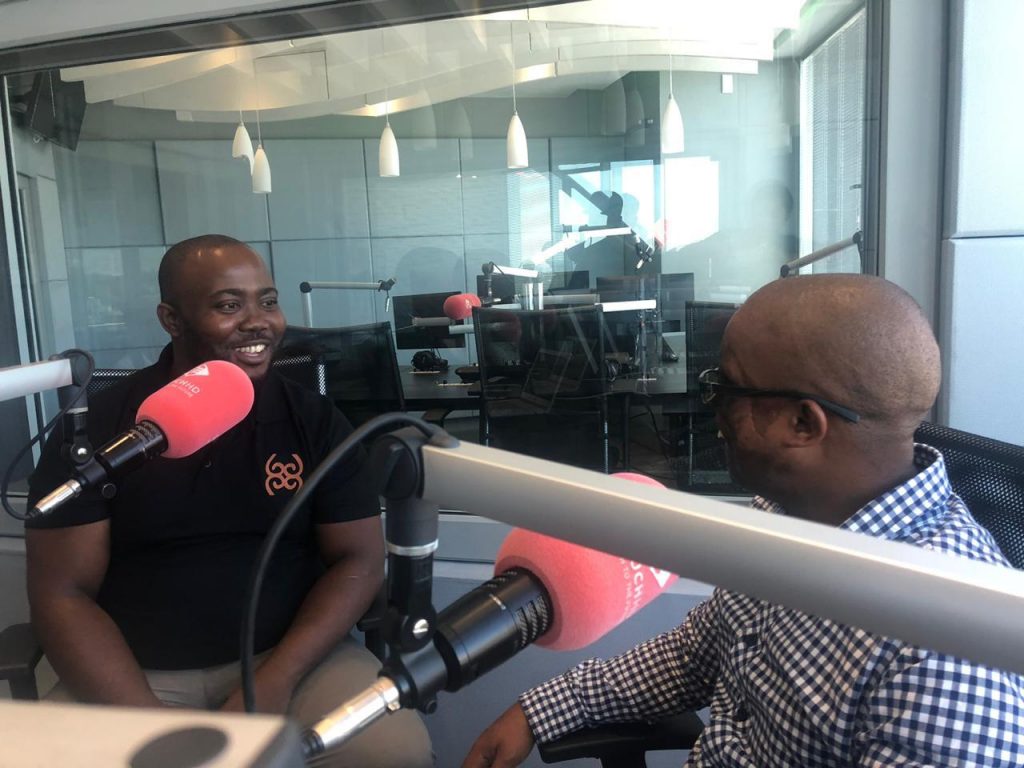
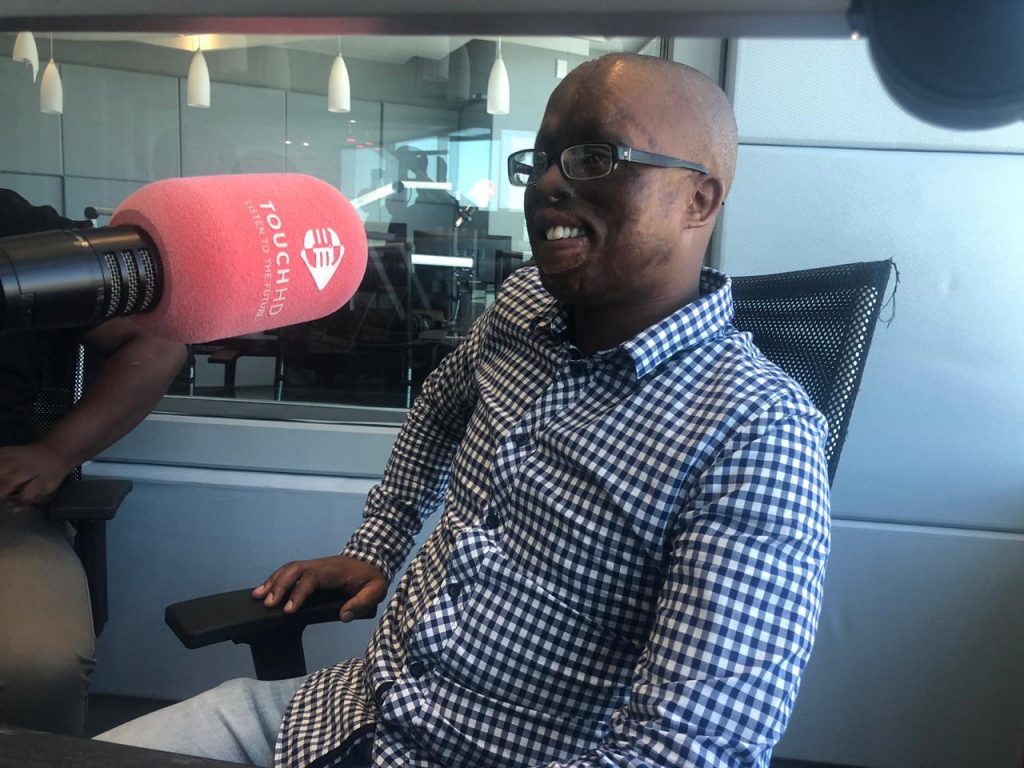
    Every Thursday, Thandwefika, the co-founder of Hadithi ya Africa, speaks to ordinary people who have lived through extraordinary experiences, trying to figure out “How do you even live through something like that?”

    If you need some inspiration on how to navigate your life’s challenges, then these “Stories to live by” are for you.

    https://iono.fm/c/4209
    Subscribe / Listen Now
  • DBill pty LTD

    DBill pty LTD

    Co-Owner and Board member DBILL Facilities & Property Management

    DBILL Facilities & Property Management is a Facilities & Property Management company focused on keeping your workspace and offices in an optimal condition that allows you the freedom to focus on your core business.

    Our unique scheduled maintenance system gives you peace of mind by allowing us to keep track of all compliance inspections and service of your electrical, plumbing, and safety systems.
    Our expert team of mobile and on-site technicians ensure that your building maintenance needs are being met by installing the perfect equipment for maximum efficiency. We pride ourselves in our in time and detailed reporting so that facilities management is one less thing that you need to worry about.

    DBILL Facilities & Property Management is a Level 1 BEE contributor and we aim to be your long term preferred partner that scales with you as your business grows.

    To us, your office is not just another job. We take pride in the solutions we deliver, We hold each other to a higher standard and achieve excellence in every job.

    Contact us on sjmalaza@dbill.co.za

    dbill.co.za