
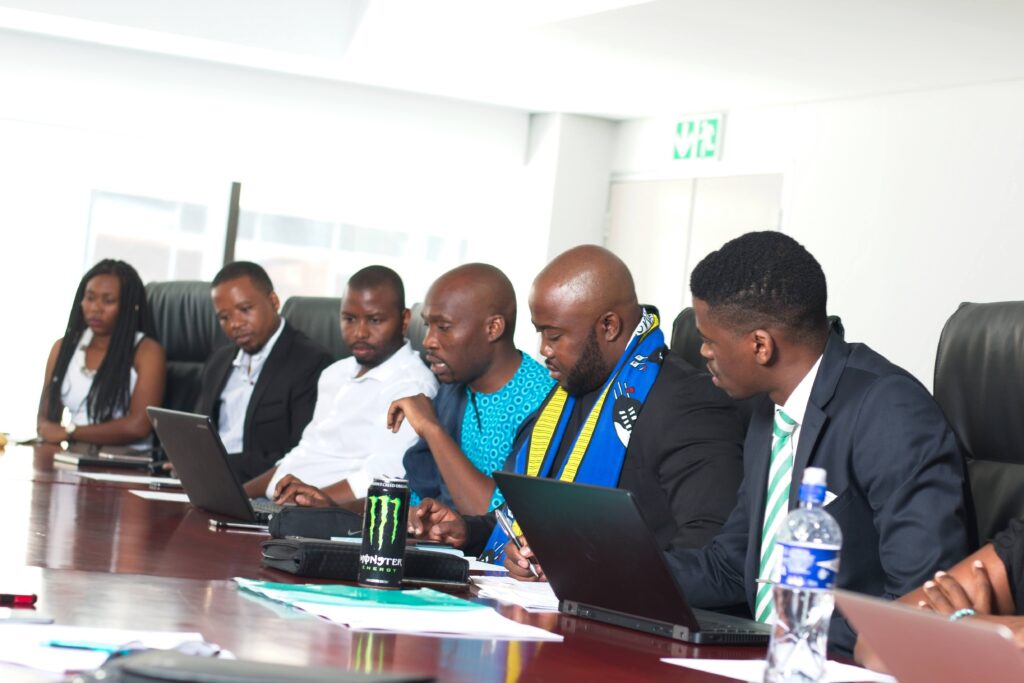
Team building
Team building
Most team building is a good day out that changes nothing by Wednesday. The photographs are lovely. The team goes back to not phoning each other.
I build the day around something the team already has to fix. The games are real games and people genuinely enjoy them. They are also doing a job.
Start with the thing that is actually wrong
Before I design anything I want to know what the team is about to walk into. A merger. A handover. A new structure. A year that went badly. Two departments that have to work together and do not.
That answer decides the exercises, the teams people are put into, and what the debrief asks. Without it you get a day of activities, which is entertainment with a catering bill.
What that looks like in practice
A government IT programme was handing over to a support phase. About 30 people, three districts, mixed seniority, and the end-of-project mood where everyone is relieved and nobody is quite sure who they call when something breaks in November.
So the day was built on exactly that question. People were put into their real district teams rather than shuffled randomly, because those are the teams that have to work afterwards. The challenge rotations made them depend on each other under mild pressure. The debrief round asked one thing: who calls whom when something breaks.
The day closed with a lightning round, one card per person, two piles: keep doing and start doing. That took twenty minutes, and it also produced the written lessons record the project close-out needed anyway. The client got a team-building day and a project artefact from the same twenty minutes.
The exercises are tested, and they are written down
I keep a bank of facilitation games that have been run in real rooms, with the set-up, the timing, the equipment and the debrief questions recorded for each one. It is published as The Facilitator’s Book of Gimmicks, and the team challenges section is where these come from.
- Bucket with Strings. 20 to 30 minutes. A group moves a bucket using only strings, which no individual can control alone. The debrief is about who took charge, who went quiet, and what the team did when the first plan failed.
- Agent Down. Hidden objective cards, one per person, scored against an expert solution. It surfaces the thing every team has and never discusses, which is people quietly pursuing goals nobody else can see.
- Egg Drop Engineering. Constraint, deadline, one shot. Good for teams that plan forever and never ship.
Nothing needs specialist equipment and nothing needs anyone to be physically brave. Mixed seniority and mixed fitness are the normal case, so the bank is built for it.
How a day is put together
- A conversation first. What is coming, who is in the room, what has to be different afterwards, and what must not be said out loud on the day.
- An opening frame. Short, warm, no slides. People need to know why they are there before they will play.
- Two game blocks with a debrief each. The game is the easy part. The debrief is where the work happens, and it is the part most facilitators rush.
- A closing round that leaves something behind. Written, in the team’s own words, and handed to you.
- The social half. If there is a braai, a padel court or a game drive after it, that is the reward and it should not be the programme.
Who this is for
Teams that have to work together after the day, and a sponsor who can say what should be different. Project teams at handover, departments that have just been restructured, groups that have gone remote and stopped talking, and leadership teams who need to disagree properly for once.
If what you want is a fun day with no agenda behind it, say so. I will run that too, and I will not pretend it is going to change anything.
Check a date
Thirty minutes is enough to tell me who the team is, what is coming, and what has to be true when they walk out.