
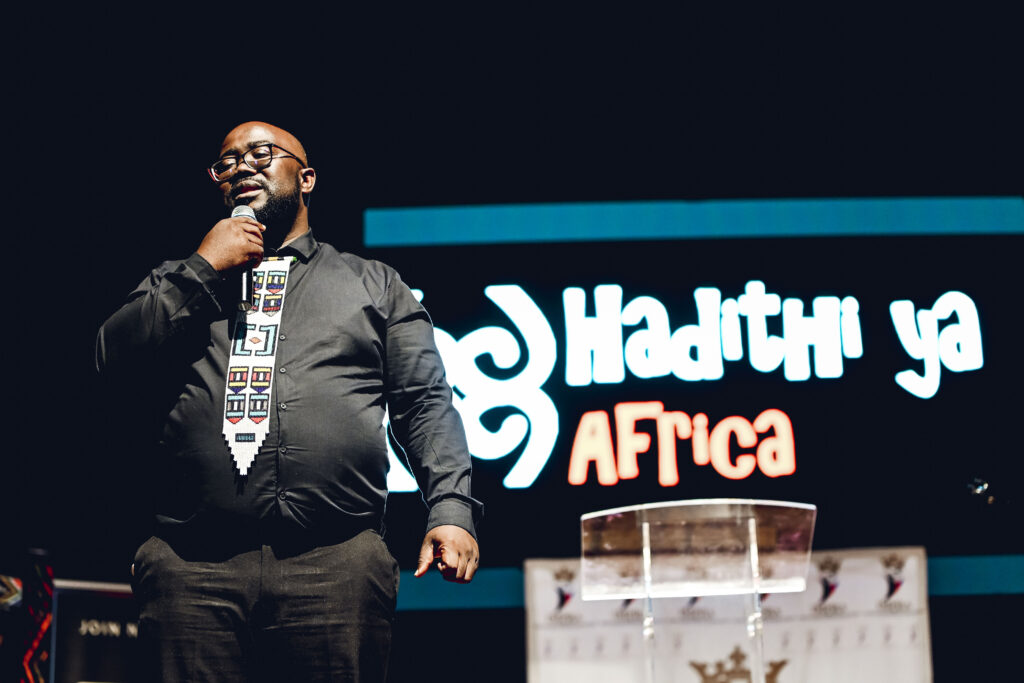
Keynote
Storytelling as a leadership skill
In 2019 I stood in Southern Africa’s final of the Toastmasters championship with a speech about a chicken crossing the road, and I won.
A decade of that taught me one thing worth passing on: speaking is thinking made audible. If the thinking is muddled, no amount of delivery training will save it.
Why this matters to a leader
Most leaders are not bad speakers. They are unclear thinkers under time pressure, in front of people whose attention they have not earned. The symptoms show up as long meetings, repeated instructions and strategies nobody can recite a week later.
What the talk covers
- How attention is actually earned in the first thirty seconds, and what forfeits it
- Structure that survives interruption, because your briefing will be interrupted
- Using a real story rather than a borrowed one, and why the borrowed one is always obvious
- What to do when the room turns, from someone who has had it happen on a competition stage
- The difference between being remembered and being repeated, which is the only one that matters for a strategy
The masterclass version
Half or full day, small group, everyone speaks and everyone gets coached in the room. People bring a real briefing, a real announcement or a real pitch they have to give, and leave having rebuilt it.
It is uncomfortable in the way that useful things are. Nobody watches a slide deck about speaking and gets better at speaking.
Format
- Keynote, 45 to 60 minutes
- Masterclass, half or full day, capped so everyone gets the microphone
- Runs well as the opening of a leadership programme, because it changes how the rest of the week sounds
Book this talk
Tell me who is in the room and what they have to say to whom.