
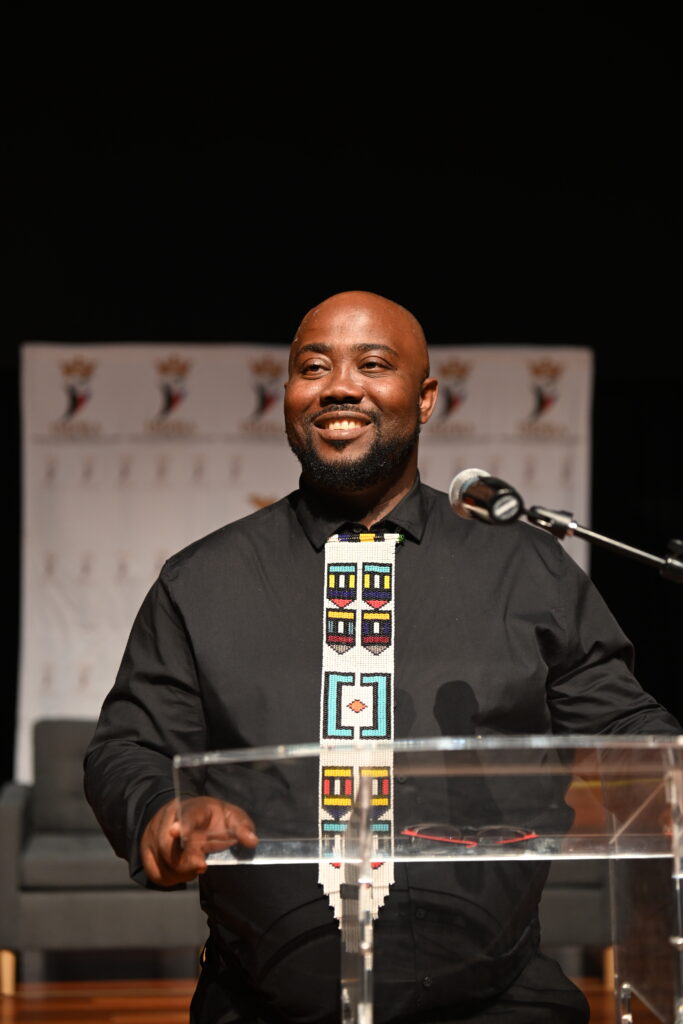
Master of ceremonies
Master of ceremonies
Every item starts within five minutes of its slot. Every name is said correctly. Every speaker closes on cue. There is no dead air, and nobody in the room notices that any of it took effort.
That is the whole promise. You stop worrying about the programme.
Why most events feel like a gamble
Most organisers book an MC and hope. They meet once, hand over a running order, and find out on the day whether the person on the microphone can read a room, hold a schedule, and handle the speaker who talks for twenty minutes.
By then it is too late to fix anything. The catering is moving, the speakers are nervous, and the venue has a hard stop that will not move for you.
What I do before the day
A clarification meeting, within 48 hours of booking. Six questions, and I write the answers down in front of you. Who has final say if there is a disagreement on the day. What is fixed and what can shift. What guests should feel at each part of the event. Which speeches are non-negotiable. Where you want the buffer time. Who I call when something goes off script.
That third question is the one most MCs never ask, and it is the one that makes the programme mine to run.
I call your speakers. Each one, before the day, for content and length. That call is what stops two speakers telling the same story, and it is why nobody has to be cut off mid-sentence.
I turn your programme into a timed production plan. Catering movement mapped against speeches, so the food arrives between the right two items rather than during the one that matters.
I build three versions of the running order, not one. A, B and C, with a bridge bank behind them: lines that hold a room while a supplier catches up, and a list of what must never be said. You never see the other two. They are why a late start does not become your problem.
What it looks like when it works
A reception in September 2026 opened 30 minutes late against a hard stop that could not move. Instead of cutting the programme, the order changed: the welcome, the grace and the fashion walk ran before lunch, and every speech moved to after the meal. The room ate on time, the schedule absorbed the delay, and the event finished when it was supposed to.
I record the events I host and map them afterwards. That one produced 22 laughs in 103 minutes of speeches, five of them big, and six craft lessons that went into the next runbook the same week. The elders ran twice their allotted time and were allowed to, because the plan had somewhere to take it from.
Weddings
A recorded interview with the two of you becomes the story bank. Every line that raises a laugh on your day comes from that conversation or from the calls to your friends, which means the jokes are yours rather than stock material about marriage in general.
You mark up the timed programme yourself and cut whatever you do not want. If you tell me one thing at the first meeting, tell me what you do not want the day to feel like.
Corporate events
Awards evenings, conferences, launches, gala dinners and milestone celebrations. Events where a sponsor has to be looked after, a programme has to hold, and somebody senior will go long.
I have hosted an entrepreneurship awards ceremony, a university gala dinner and a milestone birthday with a long speaker programme already written by someone else. That last one is the usual shape: the person who designed the event is not the person paying for it, and the job is to fit the craft to the design they have already built.
MC time on its own is a commodity
So I do not sell it on its own. An engagement is quoted on four parts, and you can decline any of them.
- Clarification and production planning. Your programme turned into a timed production plan, four to six weeks out.
- Pre-event video tributes. Solicited, collected and edited into a montage under seven minutes, landed at the right moment on the night.
- Live capture on the day. QR codes on the tables so guests upload their photographs and messages while it is happening.
- The keepsake afterwards. Those photographs and messages produced into a bound book, within three weeks.
The microphone is what makes the other three work. It is what drives the uploads, lands the montage, and makes the keepsake arrive from someone the room remembers.
Check a date
Thirty minutes is enough to tell me the date, the room, and what you need people to walk out believing. Bring the date even if nothing else is decided yet.